|
The Arts Beat is a weekly deep-dive into Memphis arts, music, dance, theater, fashion, film and events. Keep scrolling for a roundup of the best arts and culture stories from the week. Have a story idea? Send it to eperry@dailymemphian.com.
When the Memphis Art Museum opens its doors on Dec. 6, visitors will have nearly 20 exhibitions from which to choose.
“I think what’s really interesting about this moment is the opportunity to reinstall this entire museum anew and afresh — which is a really rare thing for any art museum to get to do,” said Patricia Daigle, chief curator at the Memphis Brooks Museum of Art and the upcoming Memphis Art Museum. “So unlike a renovation project or a new wing, this opportunity to really reimagine the entire museum is very rare and exciting for us.”
Daigle said that the museum staff has been planning these exhibitions for the past few years.
“We’re finding ways to tell new stories with our permanent collection, but also introduce our visitors to new works, new acquisitions that we’ve been holding onto very eagerly to debut them in our new building,” she said.
‘Making Beauty’
Taking up five gallery spaces, the main opening exhibition, “Making Beauty: Hooks Brothers Studio, 1907-1984,” is a survey of the Hooks Brothers Studio photos.
C. Rose Smith, assistant curator of photography for the museum, curated the exhibition, which features more than 150 photos from the prominent Black photography business. The Memphis Art Museum and the National Civil Rights Museum organized the exhibition.
The exhibition is the first major survey of the Hooks Brothers Studio, founded by brothers Henry Hooks Sr. and Robert Hooks Sr.
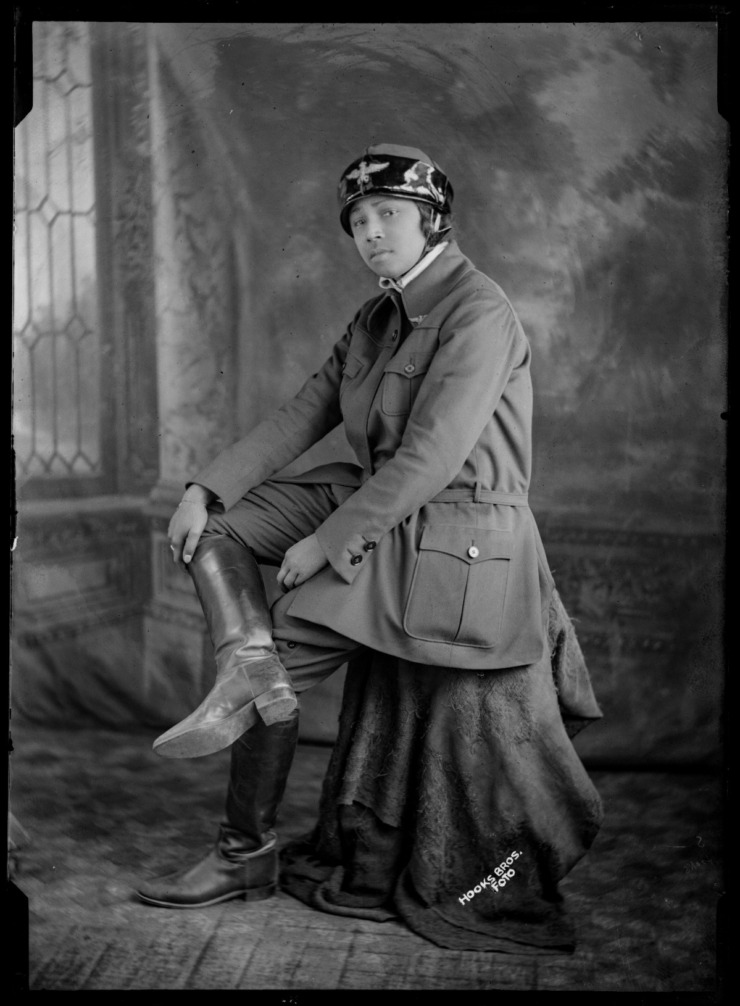 “Bessie Coleman” from Hooks Brothers Studio. 1922. Silver gelatin print. (Memphis Art Museum)
“It’s a huge opportunity for (Smith), but also to highlight such a major, important archive for this community,” Daigle said. “We found that it was a really fitting way to open the museum, as the content of that show would not have been possible without the work of Memphians like the Hooks Brothers, but also all of the sitters that are featured in the photographs themselves are from this city and the region.
“It felt like a really nice way to open this museum as this kind of gift to the community. As a mirror back to folks here.”
Daigle said it’s been incredible to see different members of the community connect with that archive, and that the museum sees this exhibition as kicking off a larger community-based project to help identify the sitters — portrait subjects — and locations featured in the photographs.
“Making Beauty” is derived from the studio’s motto, “Where’s There’s Beauty We Take It, Where’s There’s None We Make It.”
An exhibition catalogue includes essays from Smith, Rikki Byrd, Cheryl Finley, Earnestine Jenkins and Mark Sealy.
The ‘short stories’
Thirty thousand square feet of gallery space will be used for the smaller exhibitions, which the museum refers to as “short stories.” Those will feature other works from the museum’s collection.
The galleries, Daigle said, work with the building’s architecture rather than against it, a benefit of a purpose-built museum. In the current museum, there are gallery spaces built in different time periods, which can pose challenges for curators, she said.
“The galleries (in the new museum) are all located on the main level in a single continuous loop, so we don’t have any sort of spatial hierarchies, where we have some galleries on the lower levels, or the upper levels, or in this corner or that,” Daigle said. “Instead, visitors can enter and either choose to go sort of in a left direction or in the right, and it’s a continuous loop. And so what that allows us to do is tell stories that are in some ways singular, but also very connected.”
Daigle said the curatorial team is used to rotating a permanent collection gallery or installing a temporary one, so this project has been an interesting and fun exercise that they have planned with a lot of thought and care.
She thinks people will be struck by the scale and scope of the galleries.
“We have 18-foot ceilings through the entire museum, which I think can only really be experienced when you’re in the space and see sort of the grandeur of the space,” Daigle said.
There are two “River Pause” windows facing the Mississippi River. Daigle said those galleries are smaller and meant to encourage looking and contemplation, a mix of art and nature.
The following is a list of the exhibitions guests can expect to see once the new Memphis Art Museum opens:
“The River Calling: Storytelling in Memphis and the Mississippi Delta,” curated by Kristin Pedrozo, Art Bridges Curatorial Fellow, features works from the 1940s to the present day, created by artists with ties to or influenced by the Mississippi Delta.
“Power and Absence: Women in Europe, 1500-1680” examines women’s representation in European art from about 1500 to 1680. To that point, most of the works in the exhibition were created by men. According to the museum, the institution has only one work by a woman from the period (Sofonisba Anguissola). The exhibition also examines the differences in portrayals of men and women during the time period. It also looks at the systems that have contributed to women artists being overlooked in history and in museum collections, and even being forbidden to train as artists during the period examined. Brooks Museum’s former chief curator Rosamund Garrett, who is now the head of collections at Chester Beatty in Dublin, Ireland, is the “Power and Absence” curator.

Story continues below
Top arts and culture stories
“From Park to River: Building the Museum’s Collection” features the museum’s first two exhibitions — portraits of Bessie Vance Brooks and her husband, Samuel Brooks, and ends with Calida Rawles’ painting “Towner for Life,” a proposed acquisition by the Black Art Collective and the Blackmon Perry Fund. Curated by Daigle, with support from Mallory Sharp, visiting artist professor of art history at the University of Mississippi, the exhibition showcases major gifts and purchases since the museum’s founding in 1916 in Overton Park.
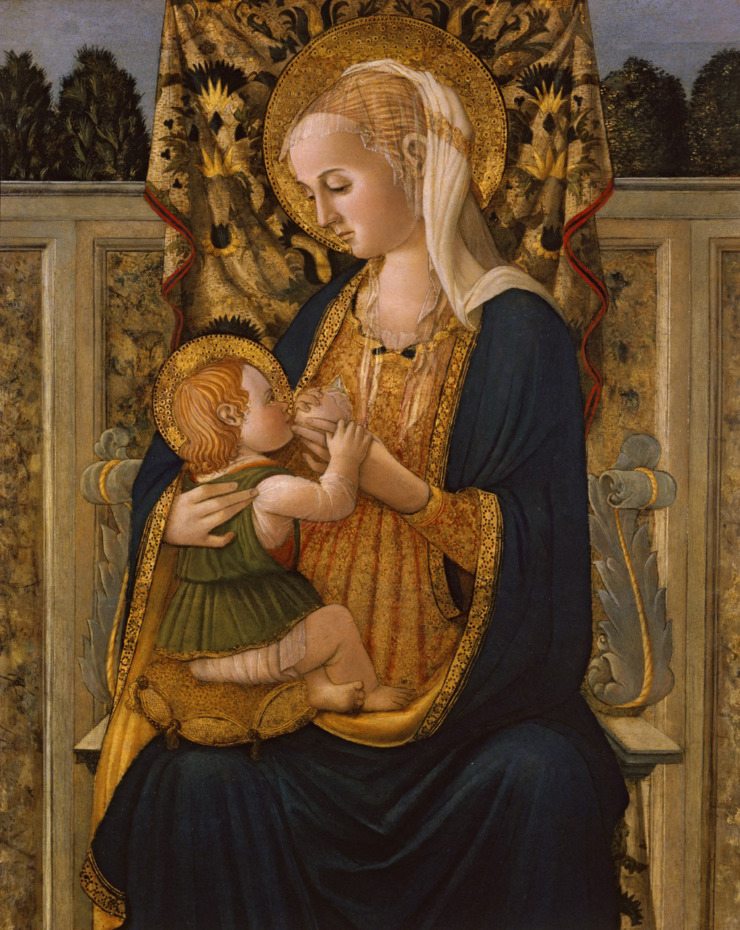 "Madonna and Child," attributed to Francesco Botticini, will be in the exhibition “Medieval Bodies.” 1475. Tempera on wood panel. (Public domain/Courtesy Memphis Art Museum)
“All That Glitters: Framing the Dutch ‘Golden’ Age” showcases the museum’s collection of 17th-century Dutch paintings and prints, as well as objects from countries that traded with the Dutch Republic.
“It’s the time period where you see the rise of the merchant class and sort of the efflorescence of Dutch genre paintings, to fill the homes of these middle-class merchants,” Daigle said. “(Sarah E. Farkas) curated this fantastic show that examines that work, but also looks at the sort of early colonial endeavors and training routes that led to the amassment of such wealth. And looking at the sort of power dynamics and exploitation that really undergirded all of that success.”
Farkas, now associate curator of art at the Crocker Museum of Art in Sacramento, California, is a former Kress interpretive fellow at the Brooks Museum.
“Medieval Bodies,” also curated by Farkas, features works produced from 1000 to 1500 in England, France, Italy, Germany, the Netherlands, and the Iberian Peninsula and have religious themes.
“Speaking in Shapes: The Language of Geometric Abstraction” is curated by Daigle. The exhibition showcases artists’ use of geometric abstraction in different time periods and cultures.
“Design, Interrupted,” curated by Daigle with support from Sharp, explores the idea of form overtaking function instead of the design maxim that form follows function.
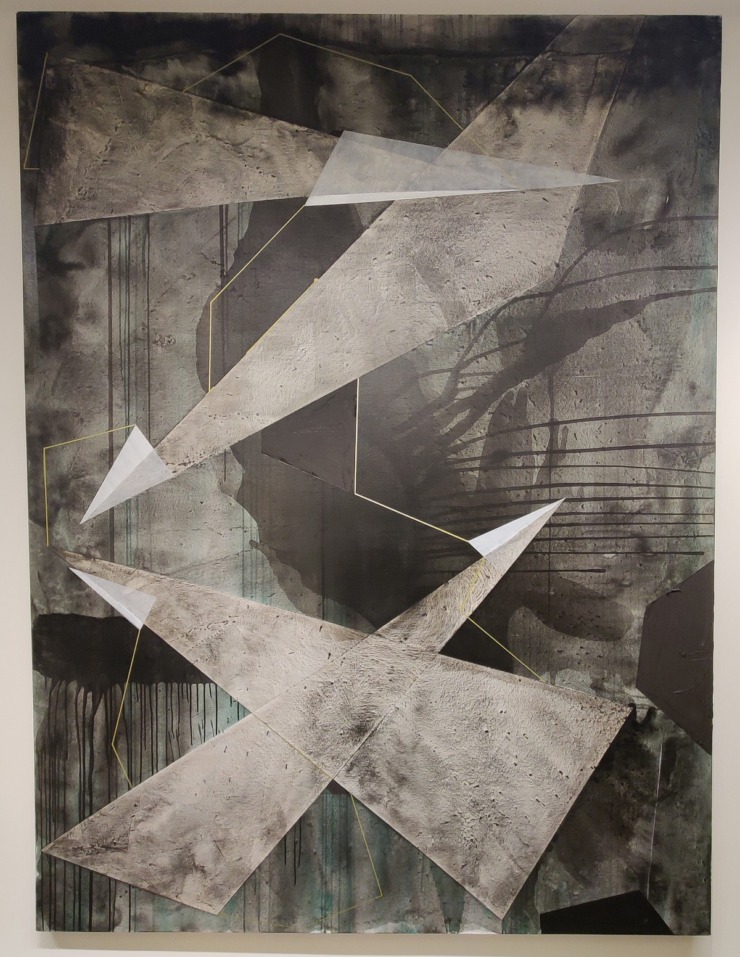 Torkwase Dyson's "In the Ways Belonging, I Measure Darker (Environmental Liberation)." 2018, acrylic on canvas. This work will be in the “Rhapsodies in Black” exhibition. (Torkwase Dyson/Courtesy Memphis Art Museum)
“Rhapsodies in Black” focuses on jazz's influence on Black Americans. It features a 1977 painting by Sam Gilliam, works by contemporary artists, and jazz songs playing in the gallery. Daigle curated the exhibition, with support from Adeze Wilford, Blackmon Perry curator of African American art and art of the African diaspora.
“Rooted: Global Gardens and Their Communities” explores the meanings of gardens across cultures and around the globe. Garrett curated “Rooted” with support from Mallory Sharp.
“Towards Liberation,” curated by Wilford, showcases artworks that document American societal shifts, from the American Revolution to the fight for LGBTQIA2+ rights. The exhibition includes “Warren Black Gospel Window,” a stained-glass work from 1877 that may feature the first American depiction of a Black Jesus Christ.
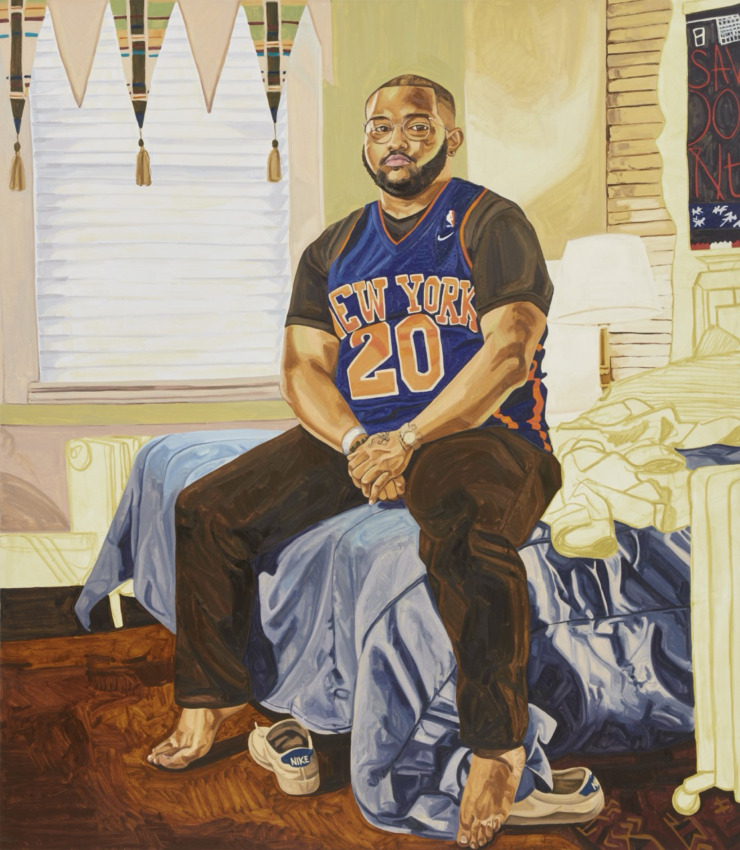 Jordan Casteel's "Jahi." 2019, oil on canvas. “Jahi” will be in the “Head to the Sky” exhibition. (Jordan Casteel/Courtesy Memphis Art Museum)
“Head to the Sky” is meant to show the Black experience. It includes Ernest C. Withers’ photos of the Civil Rights Movement, photos of people on vacation and celebrating during the Jim Crow era, and more works. The title comes from the sound “Optimistic,” released in 1991 by the group Sounds of Blackness. Wilford is the curator of “Head to the Sky.”
“How to Carry Water” explores the impact of the transatlantic slave trade and colonialism and contemporary artists’ response to the African diaspora being dispersed around the world. “How to Carry Water” is titled after Lucille Clifton’s 1989 poem “water sign woman” and was curated by Wilford.
“Plastic Arts” refers to the category of art involving the physical manipulation of clay, wood, or paint through molding or modeling. The exhibition curated by Daigle focuses on actual plastic in art created from the 1930s to the present day.
“Things to Come: Time, Technology, and the Future” is named after H.G. Wells' novel “The Shape of Things to Come,” and features works with artists exploring the future, both as utopias and dystopias. It includes the concepts of Afrofuturism and Indigenous Futurism.
The exhibition shows how TV, scientific technology, the internet, digital imaging and AI affect how artists present their work now and will present their work in the future. Daigle is the exhibition curator.
“An Inner Vision: Selections from the Hyde Collection” features works that Pitt and Barbara Hyde have collected over the last 40 years. According to the Memphis Art Museum, the Hydes initially focused on early modern artists like Georgia O’Keeffe before moving to abstract expressionist artists like Willem de Kooning and abstract artists like Rashid Johnson.
Daigle and Wilford curated the exhibition, with support from Sharp.

..... |